
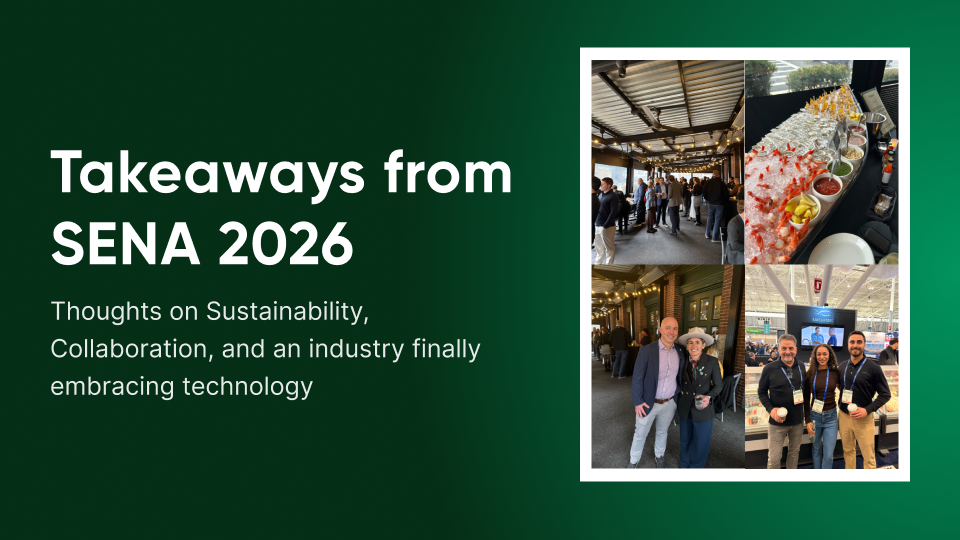


The seafood landscape I walked into at Seafood Expo 2026 is not the one I walked into four years ago.
The room looks different. More women, more people of color, more collaboration between companies that used to treat each other like fierce competition, and more technology on the show floor than I could have imagined when I was cold-calling distributors trying to convince them they needed an online ordering platform.
Here's what actually moved me this year:
The fisherman who threw out the old playbook and rewrote it
Erik Velsko from Kaia Fisheries didn't wait for the industry to hand him a better margin. He booked a flight, studied how Icelandic fishermen handle cod, and brought the whole system back to Dutch Harbor. He's also partnering with Shinkei Systems, whose Poseidon robot uses AI to scale ike jime — an ancient Japanese technique of humanely dispatching fish at the moment of catch — delivering up to 3x shelf life and Michelin-quality flavor. Now two more boats are copying his model. That's how change happens, one person who sees what could be and is willing to risk it all.
The retailer who took the guesswork out of buying sustainable seafood.
Daisy Berg at New Seasons Market spent 14 years becoming an expert in fishery sustainability so her customers wouldn't have to. The result? A yes/no label. That's it. No color coding, no research required. 98% of their seafood earns the "Sustainable Choice" badge, and now she's rolling it out across four other retail chains. A study she referenced said it best: customers will pay more for fish with a story. They just need someone to tell it clearly.
An industry learning to share
Alexandra Golub from Acme Smoked Fish talked about Sea Pact: 13 mid-supply chain companies, historically competitors, now collaborating on a 5-year strategy together. Their three priorities: responsible sourcing of priority species, social responsibility, and building a thriving North American aquaculture sector. Pre-competitive collaboration in seafood used to be an oxymoron. Now it's a published roadmap.
The technology that finally connects the story to the sale
Four years ago I was walking this same show floor convincing distributors they needed an online ordering platform. It was a hard sell.
Now? They know they need it - the question is which one. But what excites me most isn't the platform itself, it's what it enables. When a chef or a retailer places an order through Pepper today, they can click a link and read Erik's story right there at the point of purchase. They can see that the fish is from Kaia Fisheries, know how it was caught, and feel confident about what they're buying. The days of "send me 10 pounds of salmon" are numbered. Traceability at the moment of order entry isn't a nice-to-have anymore, it's what the market is demanding.
The part that stuck with me most:
Erik said something I won't forget — "You can't have a sustainable fishery where the people doing the fishing are going bankrupt." Economic viability IS sustainability. You can't have one without the other.
The industry is finally starting to act like it believes that.
We still have work to do. But what I saw at Seafood Expo 2026 was an industry that is embracing the technology, building partnerships, and doing the hard work to get there. The collaboration is real. The innovation is real. And the people in this industry — the fishermen, the retailers, the sustainability directors, the mid-supply chain companies working together instead of against each other — they are what's going to make this the best the seafood industry has ever been.
That's not the seafood industry of 10 years ago. That's something better.
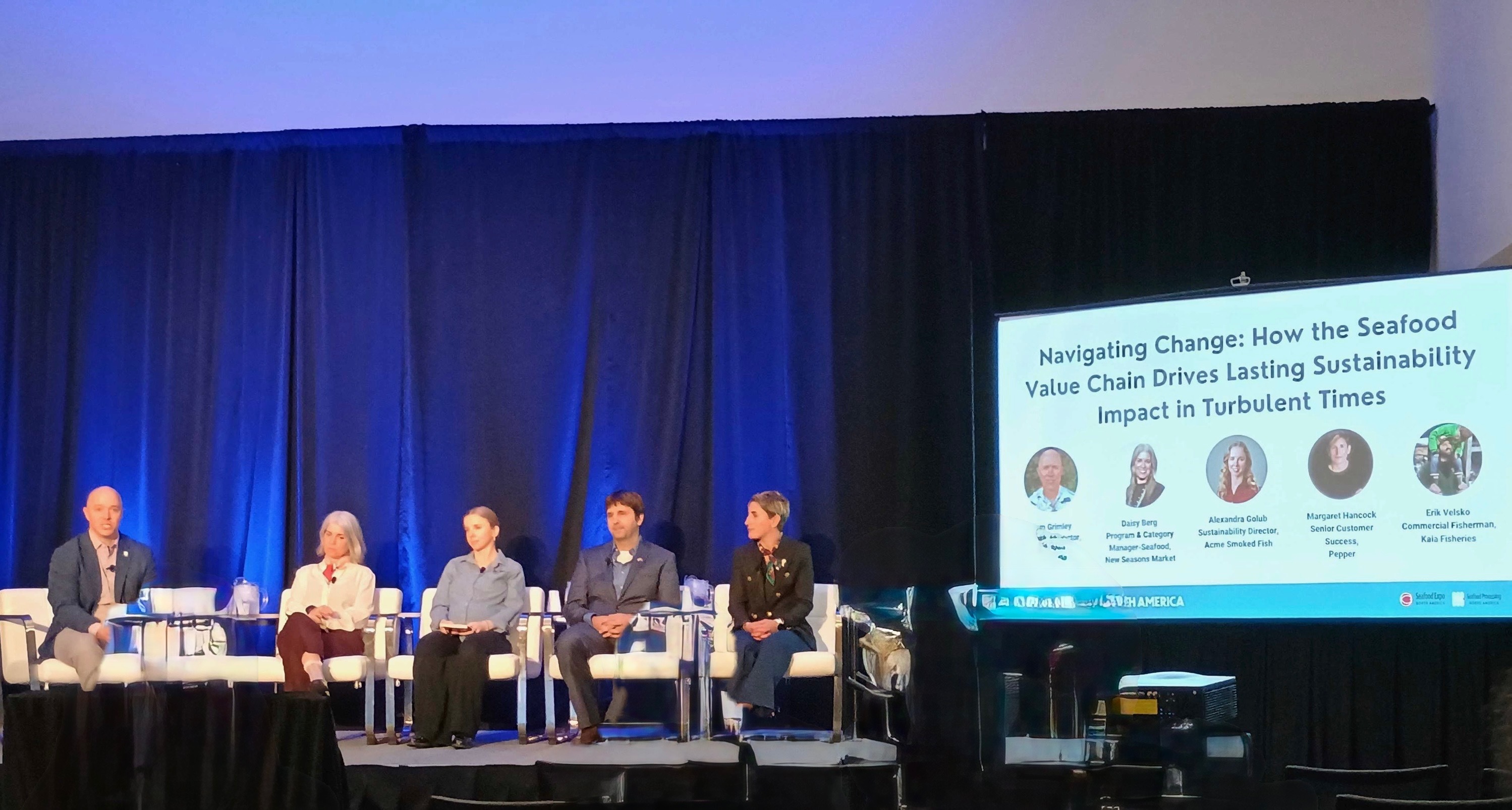
I was honored to be a panelist at Seafood Expo North America 2026 alongside Erik Velsko (Kaia Fisheries), Daisy Berg (New Seasons Market), Alexandra Golub (Acme Smoked Fish) — and a huge thank you to Sam Grimley from Sea Pact! If you were in the room — thank you. If you weren't — next year, Boston.