The Ice Cream Depot Ends Manual Order Entry with Pepper's Order Agent

"We have six different formats of vanilla, and Pepper's AI learned which one each customer means when they say ''vanilla'."
Key Outcomes

No one keys orders by hand anymore

Emailed and phoned-in orders arrive in the NetSuite approval folder ready for a check, so five to six inside sales staff no longer key orders line by line.

Order Agent learned how each account orders

With six formats of a single flavor, Order Agent knows that when a specific account asks for vanilla, it means the 11.4 L. That knowledge used to live only in a veteran order taker's head.

Promotions are constantly selling for them

A BOGO to clear a discontinued item sits at the top of the screen every time a customer or rep orders, replacing the one-and-done email blast that used to carry every promo.

The morning starts with the work already mostly done

Staff who used to sort the overnight order pile now have the capacity to run other projects.

Meet the team

Written By
Nick Ziech-Lopez
Published
August 17, 2026
Category
Case Studies
Industry
Ice Cream
Share

Problem

The orders that never went through a rep

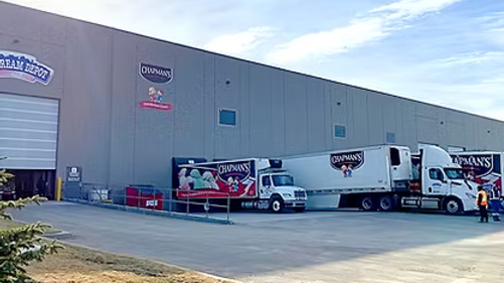
The Ice Cream Depot is a family-owned ice cream distributor based in Edmonton, Alberta, serving Western Canada and the Northwest Territories. It's approaching its 40th year in business under founder-owner Mike Rogiani, who has spent roughly 45 years in the ice cream industry. The Depot is the distribution partner for Chapman's Ice Cream, a family business itself, alongside a broad portfolio of other brands and a freezer cabinet program.  Customers range from single corner stores to central-warehouse grocery chains.

The business was built on relationships, and the field team reflects that. Mobile sales reps visit their stores every week or two, and the company promotes from within. Sales Manager Janel Rogiani-Heise has been there 12 years, starting with filing and warehouse work before running the Edmonton warehouse and moving into sales. Her counterpart Michael has been there 10.

A meaningful share of the Depot's volume never touches a rep. Those orders arrive by email or phone from rural accounts, subdistributors, corporate groups, and seasonal trade like campgrounds and ice cream trucks. Five to six office staff keyed every one into NetSuite by hand. With a single flavor in six formats, knowing which one a customer meant was tribal knowledge.

The volume didn't arrive evenly, either. Orders came in overnight and early in the morning, which meant the team started every day behind. Sorting what was urgent from what could wait was its own job, and the morning was spent catching up instead of working ahead.

Solution

Earn rep adoption first, then bring in the AI

The Depot met Pepper through TICA, where Michael Tracey, their assistant GM, connected with the team at a convention. Ownership was already looking for ways to improve efficiency, and the company had never run an ordering platform of any kind - so the first phase was Storefront, giving customers and reps a digital channel for the first time.

Rogiani-Heise knew the Alberta teams would be the harder sell, so she started where adoption would come easiest. Vancouver went first as the test region, with a single sales rep alone entering roughly 30 orders a day in the app. Once those reps were running clean, Edmonton and Calgary followed. "Our Alberta sales team is a little bit more old school," she says. "Using technology is a new thing for them. I wanted to make sure we had all the backend stuff pretty well ironed out before we got the AI involved." Only after every rep was live and the catalog was clean did she move to phase two.

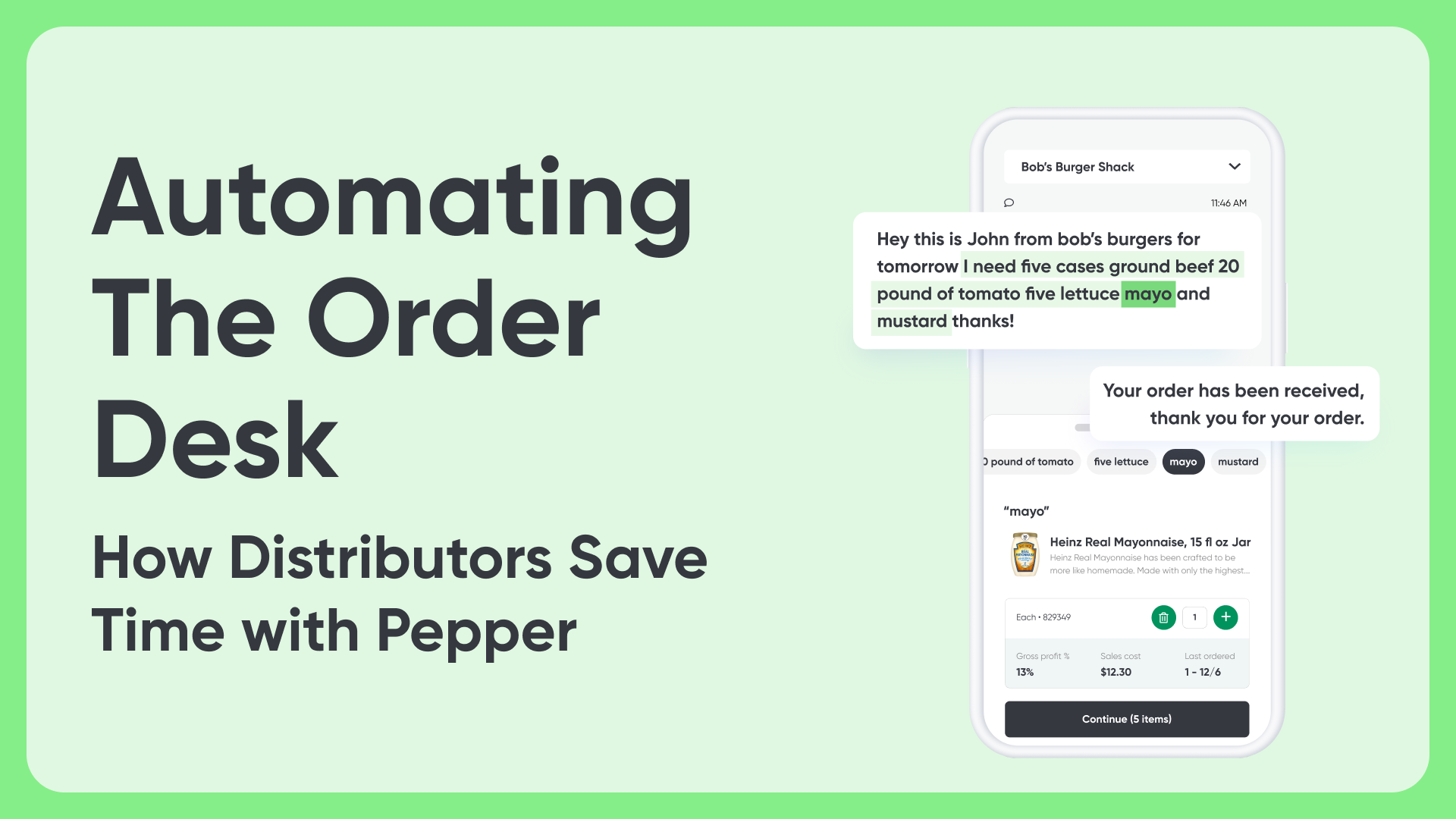
Phase two was Order Agent, aimed squarely at the inside sales desk. Orders arriving by email and phone get forwarded into Order Agent, which reads them and writes the order into the NetSuite approval folder. The desk reviews and approves rather than entering.

The implementation landed in the spring, right as the Depot was ramping into its busiest season, which made for a hard window to learn a new system. There were hiccups early, but accuracy was solid from the start and improved as the AI learned each customer's ordering behavior. "If it's coming from a scoop shop account and they say vanilla, now the AI knows it's only going to be 11.4 litres, because that's the only thing they order," Rogiani-Heise says. The judgment that used to sit in an experienced order taker's head is now codified in the system, order after order.

Results

Capacity the order desk never had

Now, mornings look entirely different. Whoever opens the office forwards the overnight orders into Order Agent, and by the time the rest of the team arrives an hour later, the work is queued and ready to approve. The triage is gone, and so is the pressure to spend the rest of the day catching up. 

That reclaimed capacity is going somewhere useful. Order desk staff who used to spend their day on manual entry now support projects the team are running, including the rollout of CoolR freezer-tracking devices across the Depot's cabinet fleet. The units sit on the glass inside customer freezers and capture a daily fisheye image, so a rep can see which baskets are empty and write an order for a far-flung account remotely, get alerted when a cabinet's temperature drops, and map every asset in the field. Work that had been squeezed in around order entry now has people behind it.

One manual step is all that's left. Today, customers still email the Depot's main inbox and the inside team forwards those orders into Order Agent. After the summer season, the plan is to transition customers to emailing the AI directly, reserving the human inbox for questions and exceptions.

Storefront is also producing its own returns. Because customers are tied to their rep, reporting shows that a rep with 500 accounts has only 300 ordering through Pepper, which turns 200 dormant customers into a specific coaching conversation. Promotional banners have replaced one-and-done emails: a BOGO on a discontinued item now sits at the top of the app for every customer and rep at the moment they order. And product images, which Rogiani-Heise calls mundane, have proven to be one of the most useful features for the Depot's many ESL customers, who can find and reorder by picture.

What made the whole trajectory possible, she says, was support that showed up. Bugs get a resolution or an answer within an hour or two. Weekly meetings are constructive. When she flagged that a date was pulling wrong in Order Agent, it was fixed. When she asked whether a report could pull a specific cut of data, she got a script, not a ticket.

"When you don't have good support and you're implementing such a huge piece into your sales team, people get frustrated super easily," she says. "Having a support team that's been so great for us is what really helped us excel in getting that adoption."

The adoption shows up in the reps who were hardest to win over.

"We have one sales rep who's very, very old school - pen and paper, everything. And he's even using the app as it’s so user-friendly. We're like, whoa, Jim's on the app. It's cut down on so many phone calls. That's literally been a lifesaver." — Janel Rogiani-Heise, Sales Manager, The Ice Cream Depot

Related Posts

Be part of the future of food distribution