



Your catalog has thousands of items, but the average order guide only has a few dozen - which your customers order reliably throughout the year.
We talk a lot about how Pepper creates an average 23% lift in basket size. But that increase doesn’t come from a single place or surface - in fact, Pepper gives distributors the ability to feature and showcase new items to customers in about twenty places across the app.
Read more for a deep dive on how our Storefront product naturally lifts basket size.
Product Discovery Embedded Throughout the Experience
Basket growth comes from covering the whole buying session, not from bolting one recommendation engine onto a catalog. There are six distinct jobs, and Pepper's Storefront has surfaces for each.
Make the Whole Catalog Reachable
Prior to Storefront, most buyers are ordering the same things over and over, with supplier ridealongs and mailed promotional fliers fueling any product discovery. With Pepper, search spans the order guide and the rest of the catalog, so a buyer typing "cambro" doesn't come up empty just because it isn't on their list.
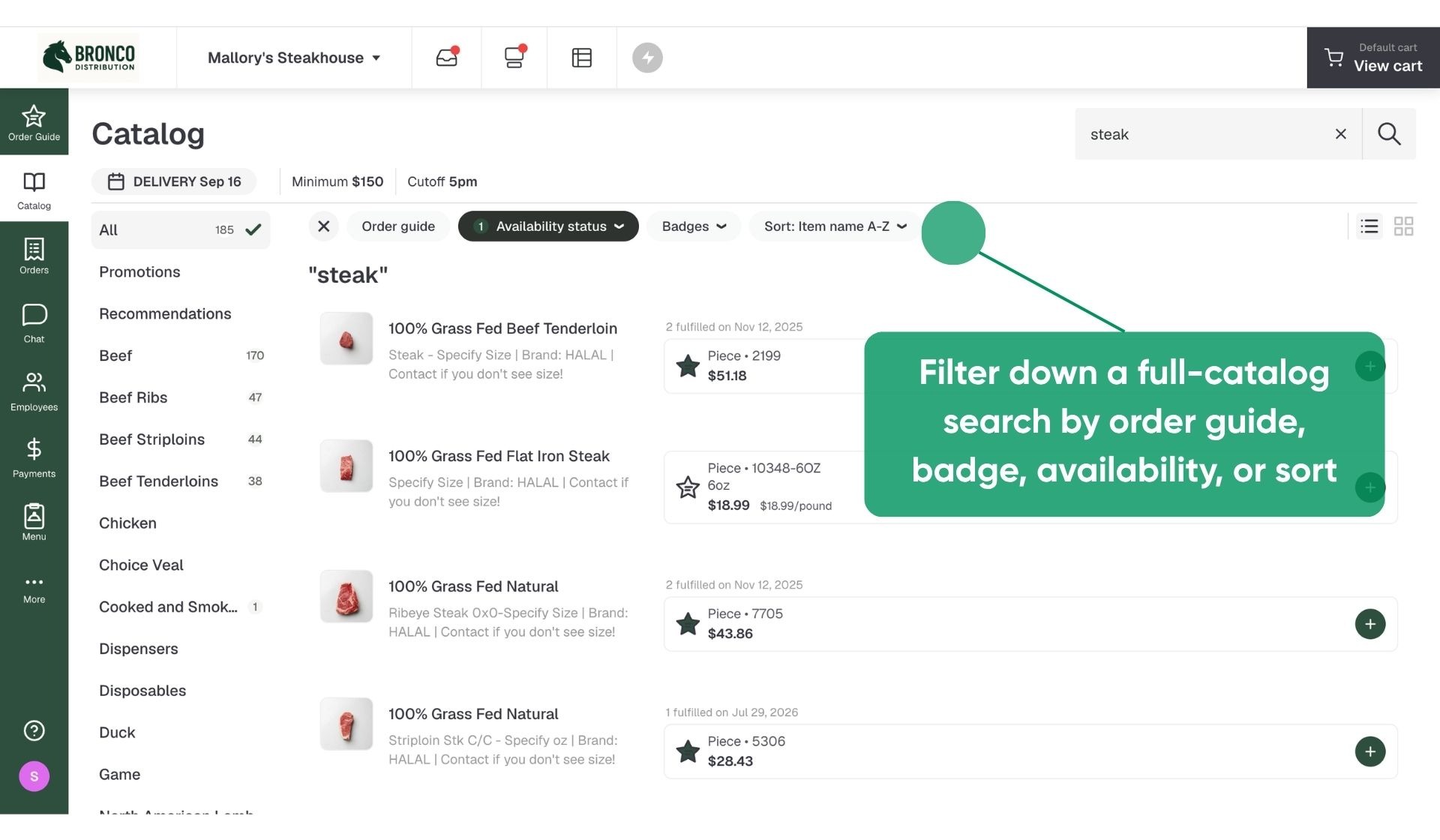
Category browse with filters, dedicated brand pages, and barcode scanning cover the rest. The results show up in the numbers:
- Over 5% of items ordered at Perrone & Sons come from outside the order guide
- 12% of online orders at The Powell Company include items that were never on a guide or saved list
- And at DiLandri Provisions, 19–22% of weekly order volume comes from off-order-guide items, found by browsing.
Discovery becomes embedded into the shopping experience, so your customers naturally buy more from you. They’ve always wanted to, now they finally have the chance.
Put Items in the Path of the Order
A buyer working through their order guide passes carousels placed inline: a featured brand, personalized picks based on what they buy, promoted items, free supplier samples. Model-driven recommendations refresh on a schedule and surface as inline add suggestions during order entry.
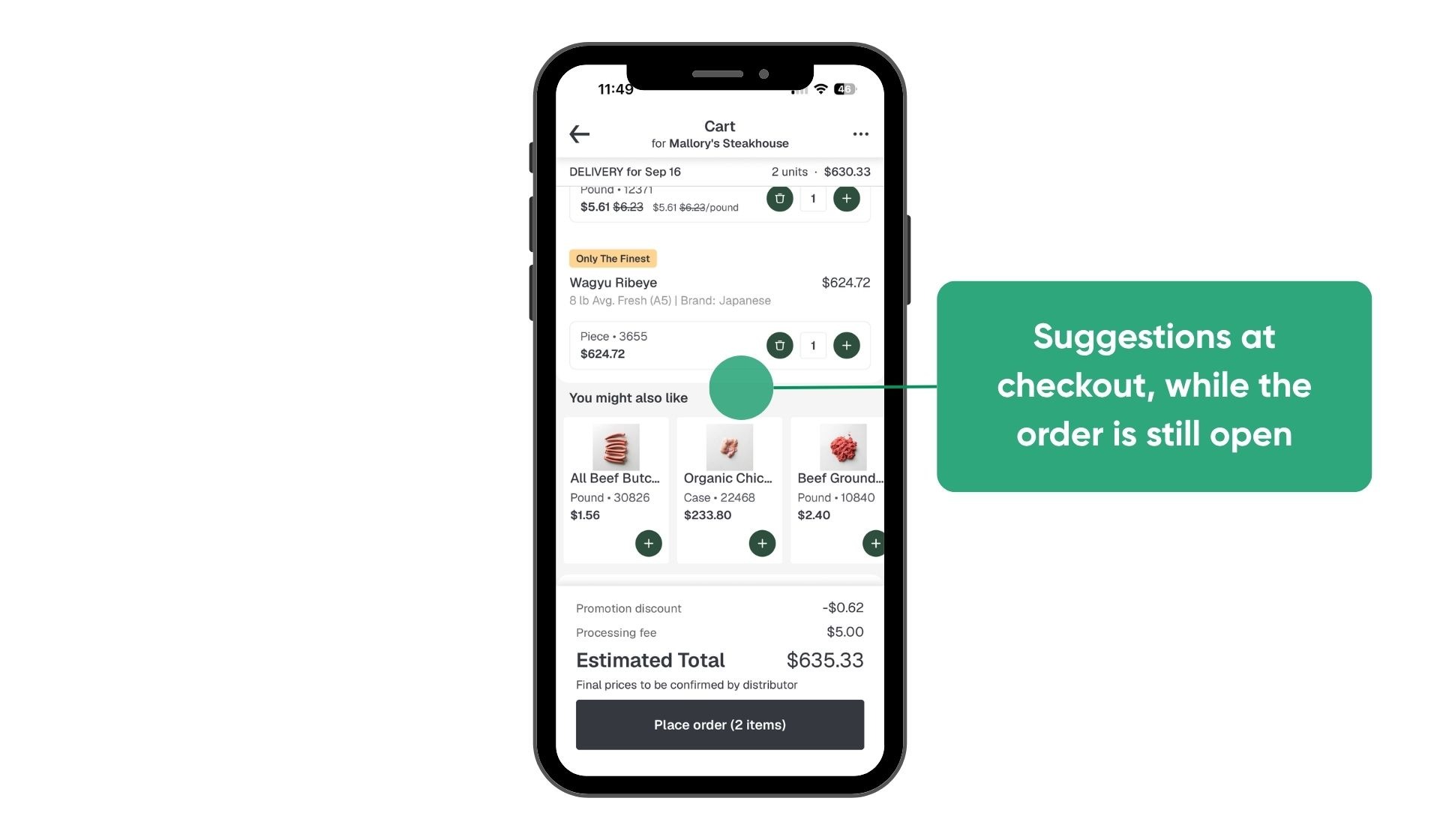
Flanagan Foodservice traced a 6% increase in order size to in-app product recommendations. Across the Countrywide network, AI-driven product discovery drove a 10% increase in sales.
Sell Similar and Distributed-Guided Items at the Point of Decision
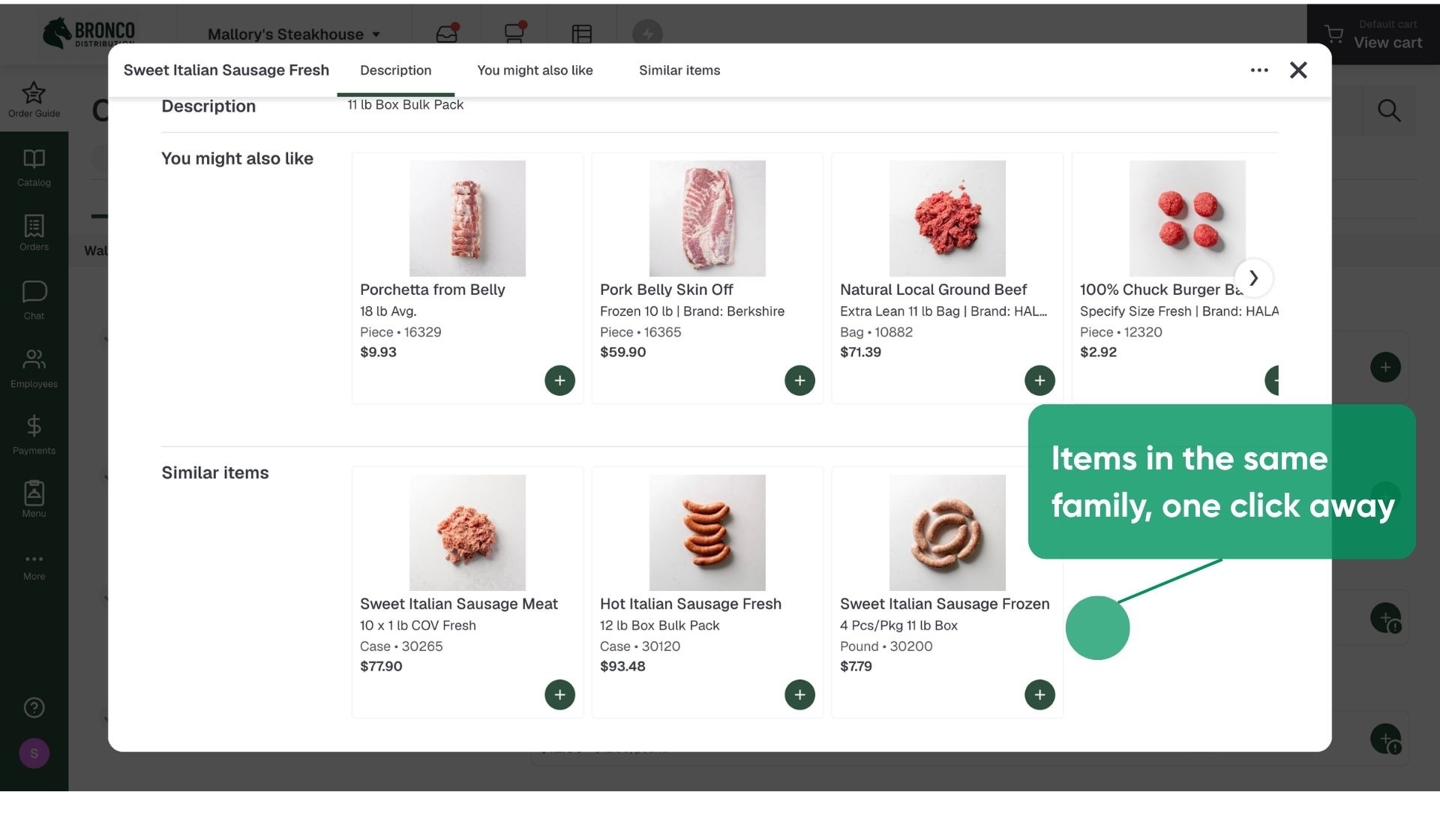
On an item's detail page, recommended items, similar items, and a link to the rest of the brand give the buyer somewhere to go besides "add to cart”. The impactful feature here is that you control what gets recommended. Our item connections allow distributors to constantly recommend the items they know pair well together, so each cup gets the correct lid and items with natural connections go together, not only growing basket size but reducing unnecessary runbacks.
The highest-value one is quieter: when an item is out of stock, recommended substitutions turn a dead line into a sale instead of a phone call. A rep at Seattle Fish Co. described exactly this shift: moving a customer from bone-in short ribs to boneless chuck flap when the math favored it, which is consultative selling the platform can now support at scale.
Make Deals Visible where Buyers Are
Pepper’s Promotional tools are a proven method to move more products and appear inline across every item list and in countless places throughout the application.
And we’ve spoken so much about promotions that at this point the proof points speak for themselves:
- Loffredo Fresh Foods generates an additional $100,000 in weekly sales from in-app promotions and broadcast messages, with new promotions live in under five minutes.
- Flanagan found digital promotions 10x more effective at converting buyers than a DSR-led motion.
- A Frosty Acres member saw 8.5% volume growth over the year, with a measurable spike in engagement and click-throughs on every campaign they ran.
Let Supplier Dollars Create the Reach
Pepper’s Growth Agent provides display banners, sponsored search results, and advertiser-funded sample requests that put supplier-backed items in front of buyers without spending your own marketing budget.
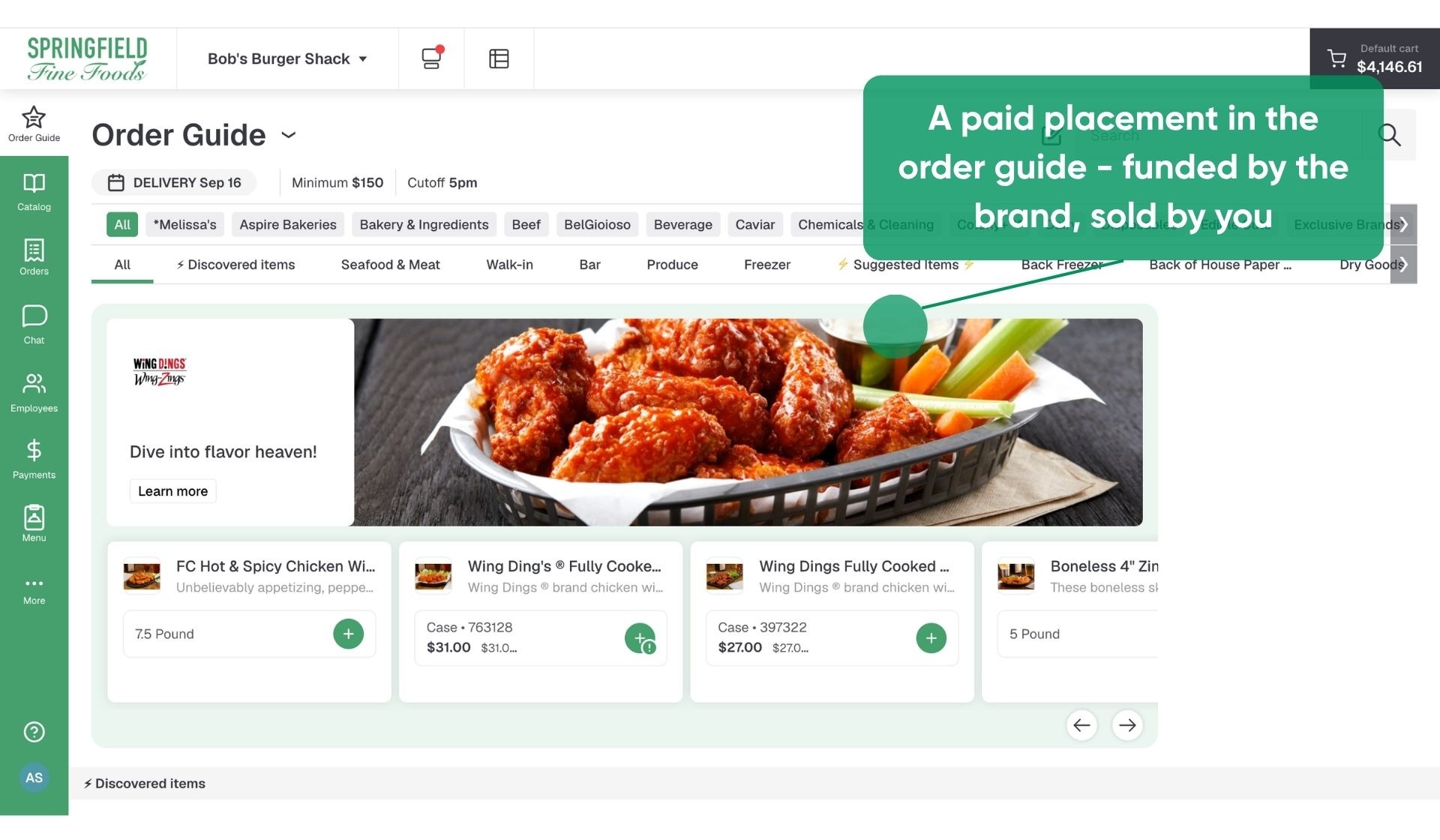
One division VP reported 20–30% case lift across three two-week campaigns, plus roughly 300 new buyers reached over the year. Schenck Foods has seen double-digit incremental case growth during campaign periods, with suppliers funding only the cases that were genuinely incremental.
Close the Gaps Where Lines Fall off the Order
Essential items are the most powerful play in the DSR playbook, that can be used to incredibly great effect. Flag what buyers are missing at checkout, or what you know you want their eyes on before they’re all done.
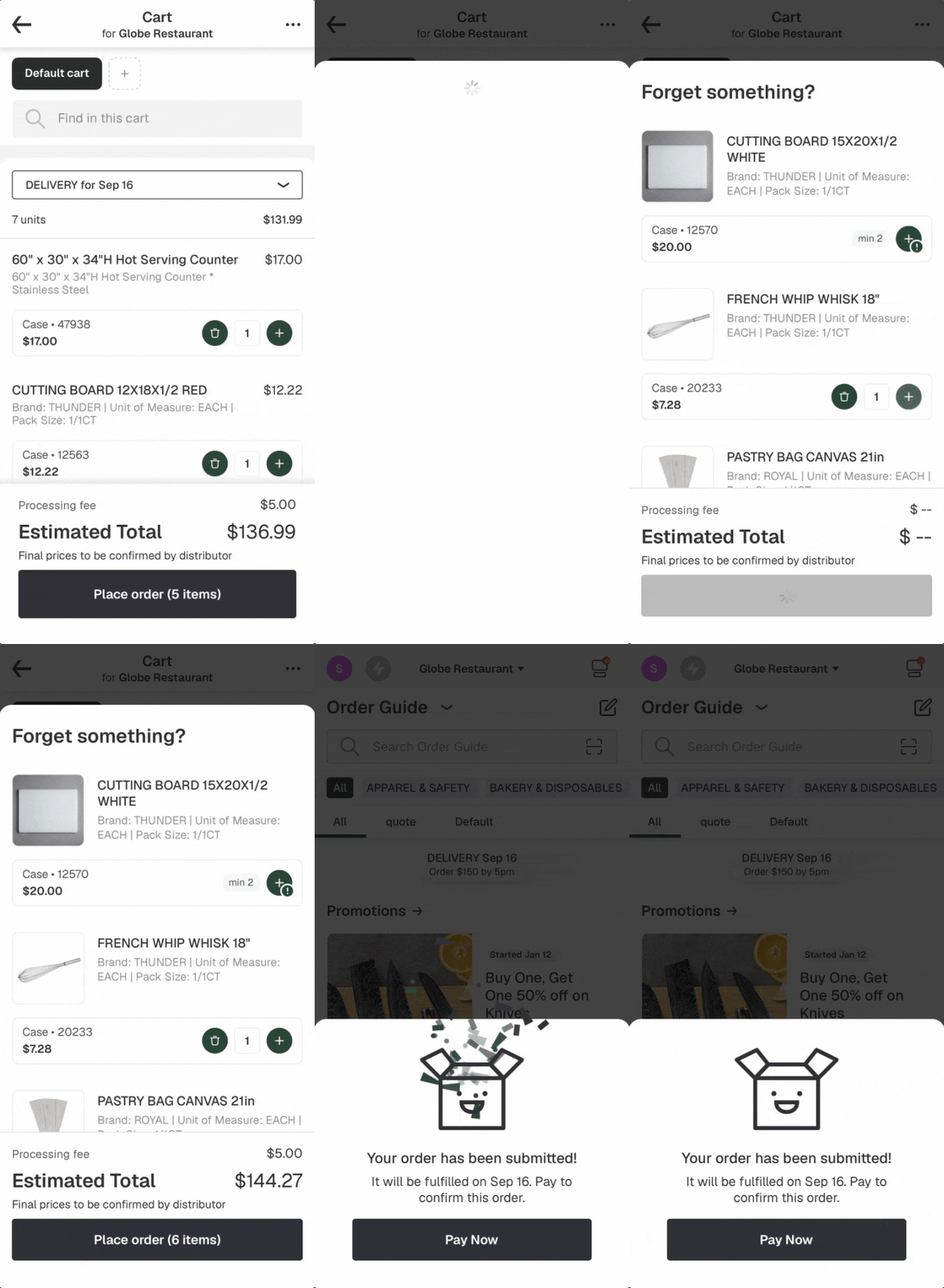
Orders lose lines in more than one way, and Pepper covers each. Reorder pulls a full past order into the cart. Prebook opens time-windowed items during their buying window. Standing orders add recurring items automatically. And Order Agent matches inbound texts, emails, and voicemails against your catalog, so even orders that never touch the app land as clean, complete lines.
The Catalog that Does the Selling
Each of these surfaces is small on its own. but together they meaningfully change what a buying session is for your customers. Instead of a form that captures the same forty items your customer already knows about, the order guide becomes a place where the rest of your catalog shows up: brands they haven't tried, categories you added two years ago, the deal you're running this week.
That's what Storefront is built to do. Not a webstore bolted onto your ERP, but the surface where your catalog gets in front of buyers every time they order, in a dozen places they'll actually pass through.
Your catalog is already bigger than your customers think it is. The work is making the rest of it visible on a Tuesday night, on a phone, in the ninety seconds before they hit submit.

.png)